Why Beaded Weft Hair Extensions Are the Only Method That Won’t Slip on Fine Hair
When clients with fine hair sit in our chair, they almost always share the same story. They’ve tried extensions before, felt hopeful for a day or two, and then watched them slide down or twist out of place. We understand how stressful that can be, especially when you want your hair to stay in place and feel natural. The truth is, fine hair has different needs. It can’t hold weight in the same way, and some methods are not designed for it. That’s why we often opt for beaded weft hair extensions when working with fine hair, as they stay secure and protect the hair from damage.
Why Other Extensions Slip but Beaded Weft Hair Extensions Stay in Place on Fine Hair
Below is a clear view of how each method performs on fine hair, highlighting the different issues or effects it causes:
Tape-ins
They rely on adhesives and require a surface to adhere to. Fine hair doesn’t provide tape with much surface area, especially near the scalp where the adhesive is located. As natural oils move through the hair, the tape loses its strength, and the panels begin to drift.
What usually happens with tape-ins on fine hair:
• Panels rotate as hair sheds and moves.
• Adhesive breaks down quickly when the hair is naturally soft.
• Washing and daily styling loosen the bond.
Clip-ins
These are attached with pressure clips, not a proper anchor. On fine hair, clips often grip only a few strands at a time, causing the hair to slide every time the client moves or adjusts their hair. This is very different from the steady grip of beaded weft hair extensions.
Here’s why clip-ins don’t stay stable on fine hair:
• Clips depend on the thickness to “catch” onto.
• Light strands slip out when the hair shifts.
• Fine hair bends easily, so clips move with it.
Fusion/Keratin Bonds
Fusion bonds attach individual pieces of extension hair to small natural sections. That means the natural hair must hold the entire weight of each bond. On fine hair, those sections don’t offer enough strength, so the bond can rotate or loosen as shed hair collects inside the attachment.
Where fusion bonds struggle:
• The hair sections are too small to support long-term weight.
• The smooth cuticle of fine hair causes rotation inside the bond.
• Heat during installation can stress delicate strands.
Halo Extensions
Halo extensions sit on an invisible band, which means they depend entirely on placement, not attachment. On thicker hair, the weight helps hold the band in place. On fine hair, the band tends to shift, especially around the crown.
Why halos slide around on finer textures:
• The band needs density to “grip” between layers.
• Fine hair separates easily, so the band moves.
• Daily motion shifts the placement constantly.
Beaded Weft Hair Extensions
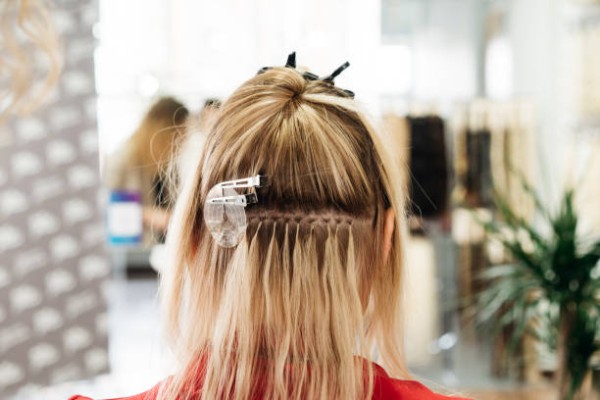
Beaded wefts anchor into a row of natural hair, not isolated strands or adhesive. Each bead supports only a small amount of weight, and the row spreads that weight across a larger section of hair.
Why do beaded wefts stay secure:
• A row of hair creates stability that single strands can’t.
• Silicone lining inside the beads grips gently but firmly.
• The weft lies flat, so it doesn’t twist or shift.
A Closer Look at the Different Beaded Weft Types
Every weft type has its own feel, thickness, and movement. In the following, we have discussed three weft types that we often use and what makes each one unique, especially when applying beaded weft hair extensions on fine hair.
1. Genius Wefts
Genius wefts are one of our favorite options for fine hair because they’re extremely thin but still strong enough for regular wear. They have no return hair, which means there’s no short “itchy” section at the top.
Why genius wefts pair well with fine hair:
• Their slim design blends easily even in light-density areas.
• They lie flat, so they stay hidden even in short layers.
• They feel soft and flexible, giving a natural movement.
2. Hand-tied Wefts
Hand-tied wefts are lightweight and neatly crafted, which makes them a classic choice for fine hair.
• Where hand-tied beaded weft hair extensions shine:
• They give a balanced, natural fullness that doesn’t overpower the real texture.
• Their thin track makes them easy to stack for custom looks.
• They spread weight across the row in a gentle way.
3. Hybrid Wefts
Hybrid wefts combine the strength of a machine weft with the lightness of a hand-tied weft. They’re ideal for clients who have fine hair in some areas but slightly fuller sections in others.
Why hybrids work well in mixed-density hair:
• They allow for fuller looks without stressing delicate spots.
• They hold up well for clients who style their hair often.
• They transition smoothly from thicker to thinner areas.
Maintenance Tips for Fine Hair
Even with a secure method like beaded weft hair extensions, fine hair needs kinder handling. Proper maintenance helps the extensions last and keeps the natural hair in good condition.
A few habits make a big difference:
• Hold the row with your hand while brushing.
• Avoid heavy oils near the beads.
• Fully dry the roots after washing.
• Use a satin pillowcase to reduce friction.
• Keep a gentle tightening schedule based on growth.
When clients follow these steps, their extensions stay secure, and the hair stays healthy between appointments.
Conclusion
Fine hair doesn’t need to fight against slipping extensions anymore. When we work with beaded weft hair extensions, we give the hair a system that supports it instead of stressing it. The row creates a stable foundation, and the right weft type makes everything feel natural and comfortable.
If your past extensions never stayed in place, it doesn’t mean you can’t experience fuller hair. It just means you haven’t tried a method built for your hair. Enjoy a comfortable and secure volume this time at our salon. Book an appointment today! We’d love to guide you through a personalized beaded-weft consultation.